
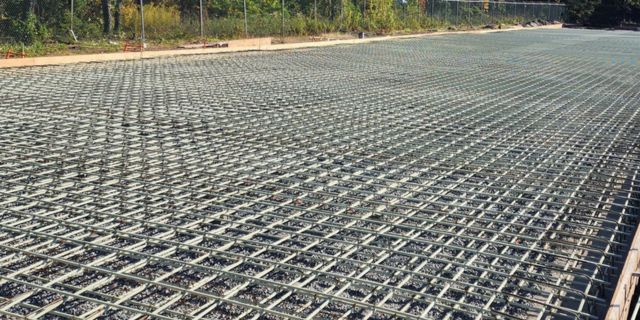
Today, sustainability is no longer an add-on in the infrastructure industry. Instead, it is embedded into how buildings are designed and evaluated over their entire life cycle. Green building certifications such as GRIHA, IGBC, and global systems like LEED have become key benchmarks for measuring environmental performance in the industry.
These frameworks assess durability, material efficiency, embodied carbon, construction practices, and long-term operational impacts – factors that are especially important in India’s diverse climatic conditions and high infrastructure demand. As Indian projects increasingly explore composite rebars, you need to know how they align perfectly with these green building certifications.
Durability and Resilience in Indian Climatic Conditions
One of the biggest challenges in reinforced concrete construction across India is steel corrosion. GFRP rebar is inherently resistant to corrosion, including chloride exposure, moisture ingress, and chemical attack. This makes it particularly suitable for Indian conditions such as coastal infrastructure, water treatment facilities, basements, bridges, and industrial buildings.
Indian green building systems like GRIHA and IGBC emphasize durability, resilience, and reduced maintenance over a building’s life cycle. Longer-lasting structures reduce resource consumption associated with repairs, retrofits, and premature replacement, supporting life-cycle impact reduction credits.
Embodied Carbon and Life-Cycle Performance
Embodied carbon emissions generated during material extraction, manufacturing, transportation, construction, maintenance, and end-of-life are gaining increasing importance in Indian sustainability assessments. Conventional steel reinforcement has a high embodied carbon footprint due to energy-intensive production and frequent replacement in aggressive environments.
While GFRP rebar manufacturing also requires energy, its overall life-cycle profile benefits from:
- Lower weight: GFRP is approximately 75% lighter than steel, reducing transportation emissions.
- Reduced maintenance: Corrosion resistance significantly cuts down repair-related emissions over decades.
- Efficient strength-to-weight performance: Structural efficiency can reduce total material demand.
GRIHA and IGBC increasingly encourage Life Cycle Assessment (LCA) thinking, especially for large commercial, institutional, and infrastructure projects.
Material Efficiency and Reduced Concrete Consumption
Steel reinforcement requires substantial concrete cover to protect against corrosion, often increasing section sizes beyond structural necessity. Because GFRP does not corrode, reduced concrete cover may be permitted in certain applications, depending on structural design and applicable Indian codes or project-specific approvals.
Cement production is one of India’s largest sources of industrial CO₂ emissions. Even modest reductions in concrete volumes across large developments can lead to meaningful embodied carbon savings, directly supporting resource efficiency and material optimization credits under Indian green rating systems.
Construction Efficiency and On-Site Impact Reduction
Sustainable construction in India also focuses on minimizing site-level emissions, waste, and disruption, especially in dense urban environments. GFRP’s rebar lightweight nature improves handling efficiency, reduces dependence on heavy lifting equipment, and lowers fuel consumption on site. Factory cut-to-length supply can also reduce on-site cutting, offcuts, and material wastage, an important consideration for projects with tight space and waste management constraints.
Reduced construction waste, lower on-site energy use, and improved site safety contribute to IGBC and GRIHA credits related to construction management, pollution control, and resource efficiency.
For developments targeting Indian green building certifications, material choices matter deeply. By improving durability, reducing maintenance, optimizing material use, and lowering life-cycle impacts, composite rebars pave the path toward more resilient, low-carbon, and future-ready construction in India.