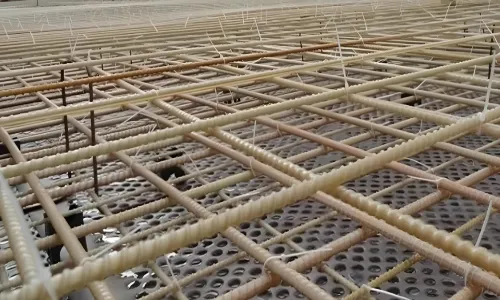
Why Composite Rebars Reduce Construction Delays and Rework
Explore how composite rebars cut construction delays and rework through lightweight handling, corrosion resistance, and simplified site logistics.

Explore how composite rebars cut construction delays and rework through lightweight handling, corrosion resistance, and simplified site logistics.
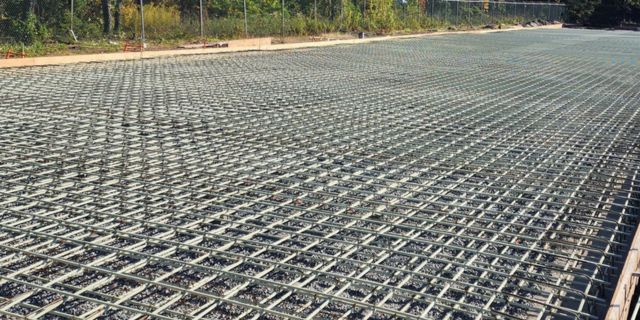
Composite rebars help achieve green building certifications by enhancing durability, reducing concrete use, and lowering life-cycle carbon emissions.

Composite rebars like GFRP are transforming renewable energy projects across wind, solar, and hydro sectors. Learn how their corrosion resistance, high strength, and lightweight design support long-lasting, low-maintenance, and sustainable clean energy infrastructure.

Explore the benefits of GFRP composite rebars for airport runways, including lower maintenance, reduced CO₂ footprint, and long-term value.
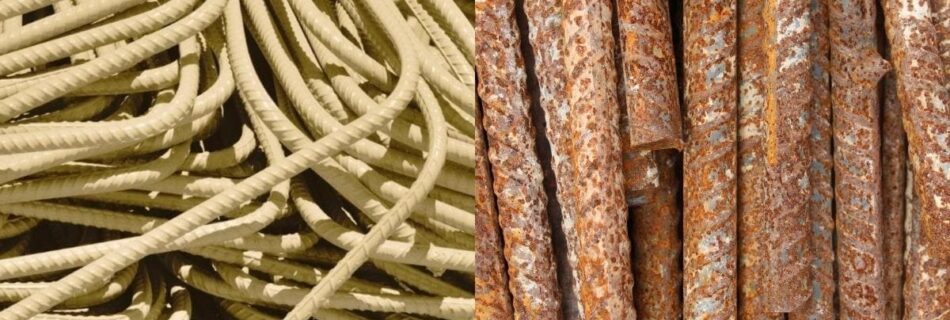
Compare the 10-year performance of composite rebar vs traditional steel. Learn how GFRP offers superior strength, corrosion resistance, and cost efficiency – making it a long-lasting, maintenance-free alternative for modern infrastructure.
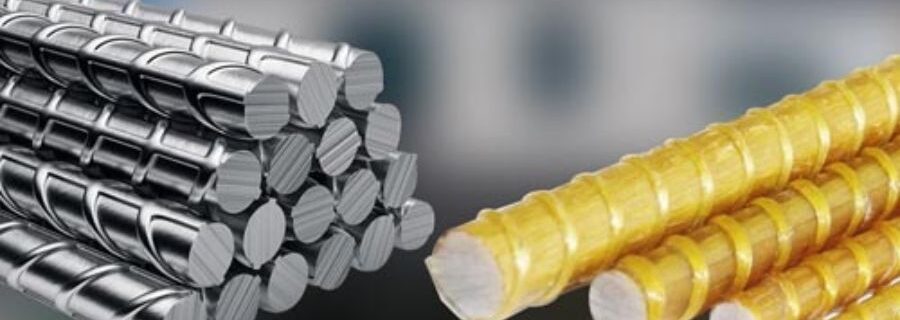
Understand the environmental impact of composite and steel rebars. Compare their carbon footprint, durability, and lifecycle performance to see why FRP rebars are becoming the preferred sustainable choice for modern infrastructure.