
For decades, steel rebar has been the backbone of reinforced concrete. But as infrastructure ages and maintenance costs rise, a new alternative is gaining traction – Glass Fiber Reinforced Polymer (GFRP) rebar. Solutions like Neobar are pioneering this shift toward stronger, longer-lasting construction across the world.
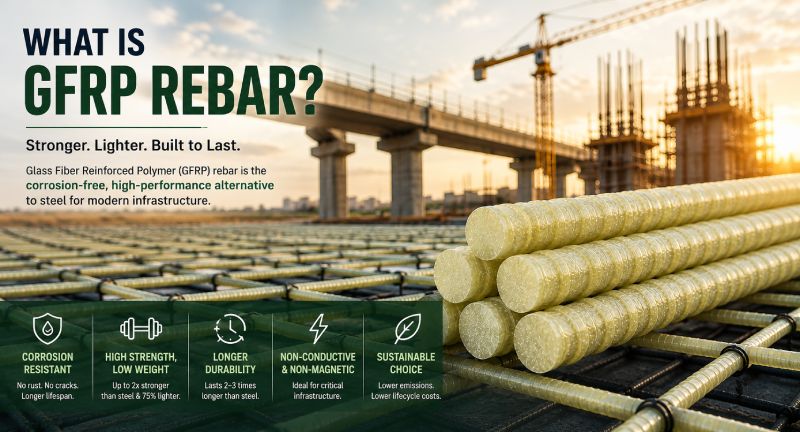
GFRP rebar is a composite material made by combining high-strength glass fibers with a polymer resin. Unlike steel, it’s non-metallic, meaning it doesn’t rust or corrode. In simple terms, Neobar GFRP rebar delivers:
- High tensile strength
- Lightweight handling
- Long-term durability
Steel’s biggest drawback is corrosion. When exposed to moisture or salts, it rusts and expands up to 6-7 times its original size, causing cracks in concrete. Globally, 40%+ infrastructure damage is linked to corrosion, and over $2.5 trillion is spent annually on corrosion-related repairs. Because Neobar is corrosion-resistant, it eliminates this problem at the source, making structures far more durable.
Why the World is Switching to GFRP Rebar
1. Longer Lifespan
GFRP doesn’t degrade like steel. Structures reinforced with Neobar can last 2-3 times longer, especially in coastal or high-moisture environments.
2. High Strength, Low Weight
Neobars are up to 2x the tensile strength of steel and around 75% lighter. This reduces transport and installation effort, often improving efficiency by up to 30%.
3. Non-Conductive
Unlike steel, GFRP doesn’t conduct electricity or interfere with signals. This makes Neobar ideal for hospitals (MRI rooms), rail and metro systems, power, and coastal infrastructure.
4. Better Sustainability
Construction contributes nearly 39% of global carbon emissions, with steel being a major factor. GFRP alternatives like Neobar:
- Reduce lifecycle emissions
- Lower maintenance needs
- Cut lifecycle costs by 20-25%
GFRP Applications –
The global GFRP rebar market is growing at a 9-12% CAGR, driven by demand for durable infrastructure. Neobar is increasingly used in:
- Bridges and highways
- Coastal and marine structures
- Water treatment plants
- Industrial and urban infrastructure
In markets like India, where climate and scale put pressure on materials, this shift is especially imperative. Construction today is leaning more towards longevity and efficiency, and GFRP rebar represents a move toward smarter infrastructure, with Neobar being at the forefront of that change. Pioneers such as DuraNeo Neobars are also actively leading this shift, and this is just the beginning.