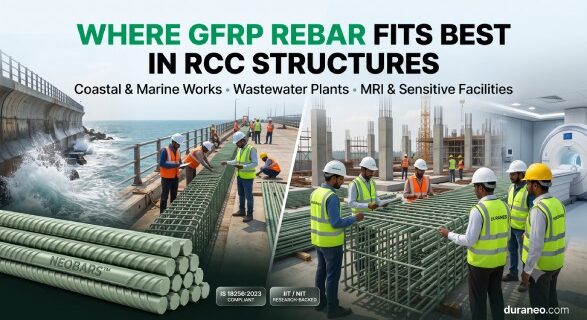
Where GFRP Rebar Fits Best in RCC Structures
Tackle corrosion and conductivity issues in RCC structures. Explore top GFRP rebar applications across marine works, tunnels, wastewater plants, and specialised facilities.

Tackle corrosion and conductivity issues in RCC structures. Explore top GFRP rebar applications across marine works, tunnels, wastewater plants, and specialised facilities.
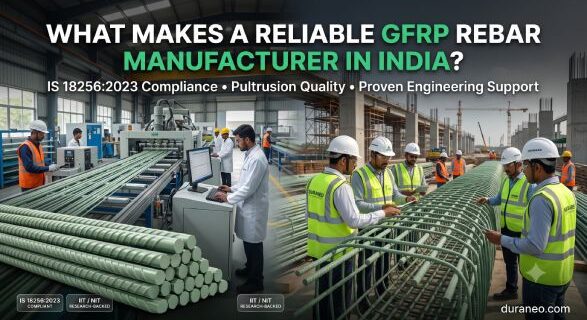
Choose the right GFRP rebar manufacturer in India. Explore IS 18256 compliance, IIT-backed quality, and high-performance NEOBARS™ by Dura Composites.

Compare initial vs lifetime costs of steel and GFRP rebar. Learn how non-corrosive composite rebar saves maintenance, repair, and replacement expenses in India.
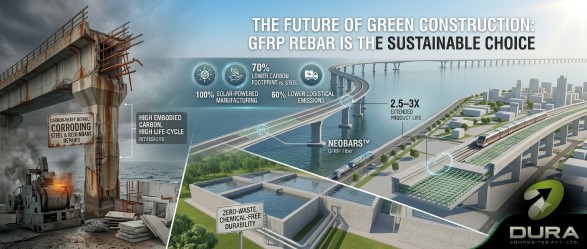
Know how GFRP rebar drives green construction. Learn how 100% solar-manufactured NEOBARS™ cut carbon footprint by 70% and extend structural life 3x.

Is GFRP rebar code-compliant? Explore key international standards including ACI 440.1R, CSA S806, and ISO 10406 governing GFRP design and structural safety.
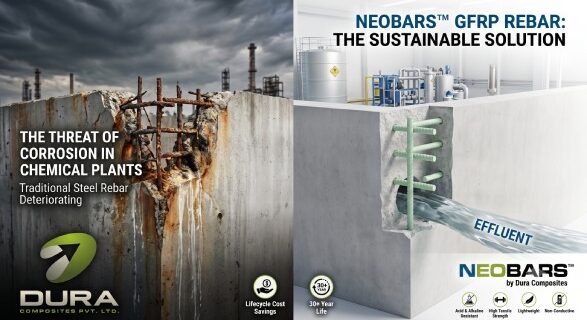
Protect chemical processing plants from aggressive corrosion. Discover how NEOBARS™ GFRP rebar resists acid, alkaline, and effluent to slash maintenance costs.
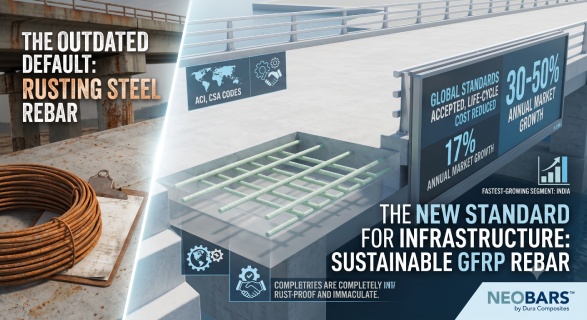
Know why GFRP rebar is set to become the global mainstream standard. Learn about its 17% annual market growth in India, code adoptions, and massive lifecycle savings.
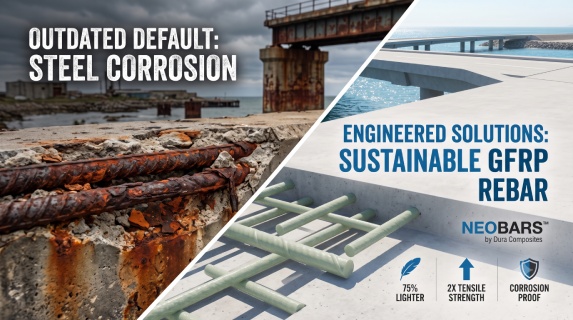
Know why structural engineers are switching steel to GFRP rebar. Learn how its rust-proof nature, 75% lighter weight, and 1,000+ MPa tensile strength beat steel.
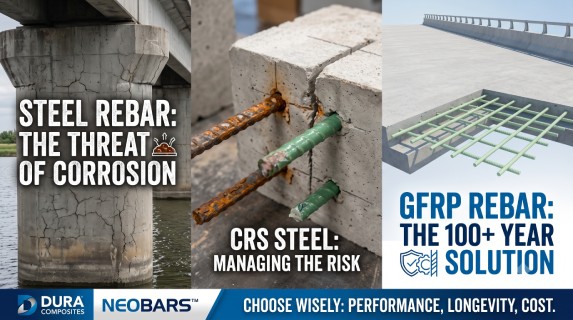
Don’t just look at upfront costs. Compare mild steel, CRS steel, and GFRP rebar to see how choosing the right reinforcement material slashes lifecycle maintenance.
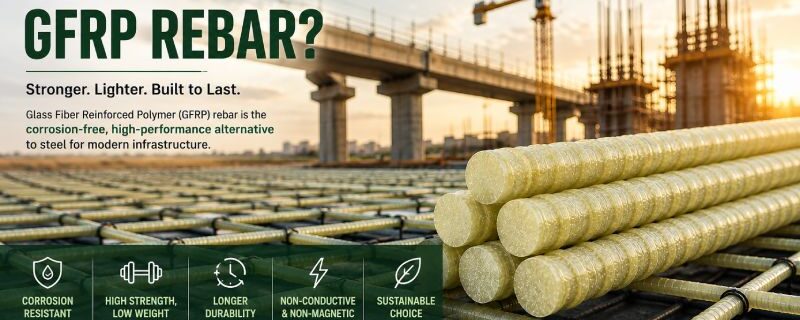
Learn what glass fiber reinforced polymer (GFRP) rebar is, its benefits, applications, and why it’s becoming a durable, corrosion-free alternative to steel.