
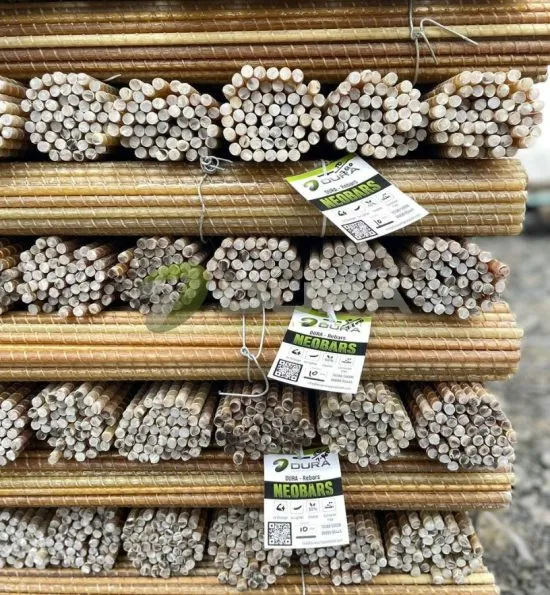
As Glass Fiber Reinforced Polymer (GFRP) rebars become mainstream in India’s infrastructure and construction ecosystem, a question arises. How do we ensure that GFRP rebars manufactured and installed in India meet the global quality, performance, and durability standards? This is where testing, certification, and quality control standards play a pivotal role. On cue, here are the ones you need to know about:
Indian Testing Standards for GFRP Rebars
- IRC: 137–2019: The most important Indian reference, covering material properties, design methodology, durability considerations, fire and thermal behavior, and testing protocol references. It mandates various tests for tensile, shear, bond, and durability.
- BIS Standards Referenced for Composites
Though not GFRP-specific, BIS has composite-related testing frameworks that are used such as:
- IS 13360 series – Plastics testing methods
- IS 2502 – Bending & detailing guidelines (used comparatively)
- IS 15909 – Mechanical testing of fiber composites
International Standards Commonly Followed in India
In practice, most Indian manufacturers align with global benchmarks:
ASTM Standards
- ASTM D7205 – Tensile properties of FRP bars
- ASTM D7957 – Standard specification for solid round glass-fiber reinforced polymer bars
- ASTM D7617 – Shear properties
- ASTM D7958 – Bend strength
- ASTM D2566 – Bond strength test
ACI Guidelines
- ACI 440.1R-15 – Guide for the design of structural concrete reinforced with FRP
- ACI 440.6 – Specification for FRP bars
Essential Material Tests for GFRP Rebars
- Tensile Strength Test: Measures ultimate tensile capacity and modulus of elasticity.
- Bond Strength Test: Includes pull-out test and beam test. GFRP’s surface (sand-coated, ribbed, helically wrapped) directly affects load transfer efficiency (LTE) between concrete and rebar, making this test a prerequisite.
- Shear Strength Test: Ensures the bar can resist transverse stresses during handling, transport, installation, and structural loading.
- Durability Tests Including:
- Alkaline resistance
- Freeze–thaw cycles
- Moisture absorption
- Accelerated aging
Concrete’s high alkalinity can degrade polymer matrices, so long-term compatibility must be established.
- Creep & Relaxation Tests: Assesses long-term deformation under sustained loads, important for bridge decks, metro rail slabs, industrial flooring, and precast components.
- Fiber Content & Fiber Orientation: Performed through burn-off tests and microscopy, this makes sure the fiber percentage meets design expectations.
- Quality Control in Manufacturing: A high-quality GFRP rebar manufacturer typically follows a structured QC system such as:
- a) Raw Material Inspection
- Fiber tensile certification
- Resin batch testing
- Additive quality checks
- b) In-Process Monitoring
- Die temperature control
- Pull-rate monitoring
- Fiber wet-out consistency
- Curing control
- c) Post-Production Testing
- Tensile & shear sampling
- Dimensional accuracy check
- Surface uniformity
- Weight per meter consistency
- d) Third-Party Certification
Many EPCs now insist on third-party testing from NABL-accredited laboratories for:
- Tensile tests
- Bond tests
- Durability tests
This significantly boosts product credibility.
- Certifications Emerging in the Indian Market
While not yet mandated at a national level, the below certifications are gaining traction:
- NABL Test Reports
- ASTM-compliant test certificates
- ISO 9001:2015 (Quality Management)
- ISO 14001 (Environmental Management)
- CE compliance for export capabilities
These certifications help ensure consistency across batches and build trust with engineers, architects, and government bodies.
Evidently, GFRP rebars are no longer just steel substitutes in India. They are, in fact, becoming the most commonly used reinforcement materials. Naturally, as adoption increases, so must vigilance.
Following global testing standards and strict in-house QC methods ensures that India’s GFRP industry is not just growing but growing responsibly. In a future where climate, corrosion, and sustainability are important factors to consider in construction, quality-certified GFRP rebars are not only optional, but necessary.