
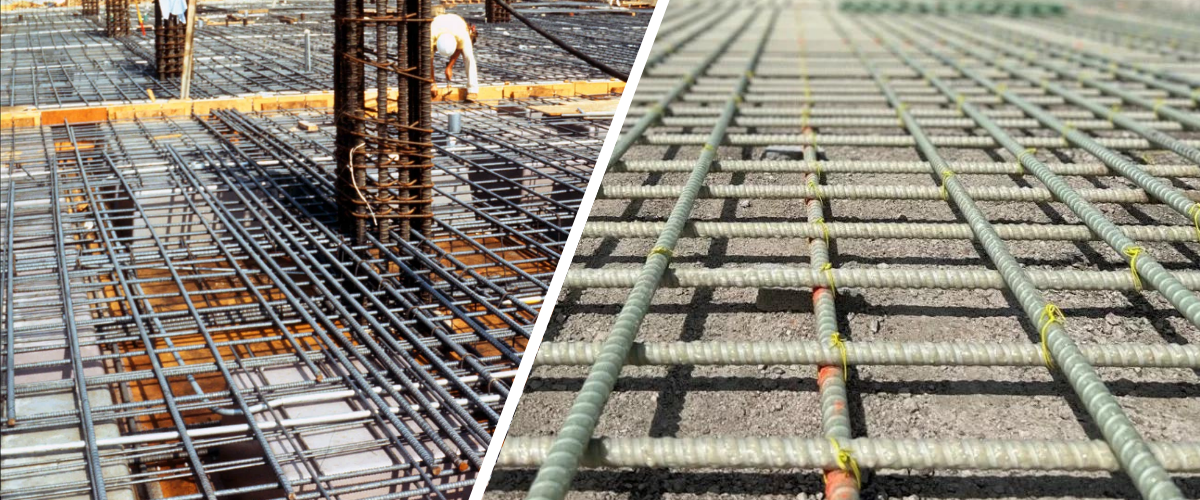
Glass-fiber-reinforced-polymer (GFRP) rebar is increasingly becoming a different approach to reinforcing concrete that solves corrosion problems that plague steel in harsh environments. The sustainable infrastructure material also lends exceptional benefits, and here are some real-world case studies to prove the same.
1. U.S. bridges – Durability proven after 15–20 years in service
A multi-institutional study examined GFRP bars extracted from 11 U.S. bridges after 15–20 years of service in environments with wet/dry cycles, freeze–thaw, and deicing salts. The research found that the GFRP bars retained strength and showed good durability under field conditions, supporting the use of GFRP in corrosive bridge applications where steel experiences severe loss of capacity and high maintenance. This kind of long-term field evidence is a major reason DOTs and agencies are specifying GFRP for marine and roadside structures.
Case-Study Takeaway: In chloride-rich environments, GFRP can deliver longer effective life than steel, lowering long-term maintenance and replacement cycles.
2. Rolla, Missouri – Box culvert fully reinforced with GFRP
A box-culvert bridge (precast units) in Rolla, Missouri built with full GFRP reinforcement replaced a steel-reinforced structure that had been declared unsafe due to severe corrosion. The GFRP solution eliminated the primary deterioration mechanism (rebar corrosion) and allowed durable precast construction suitable for a corrosive groundwater environment.
Case-Study Takeaway: For structures where groundwater or soil chemistry corrodes steel, GFRP provides a direct durability improvement that can be essential to restoring function without repeated repairs.
3. Herbert C. Bonner Bridge replacement (NC, USA) – Marine exposure: GFRP used to mitigate chloride attack
The Bonner Bridge replacement project used GFRP in concrete elements exposed to a harsh marine environment. Project reporting highlights that GFRP was chosen to combat corrosion from salt spray and tidal exposure, where steel reinforcement would require intensive protection or frequent repairs. The project demonstrates GFRP’s practical advantage in major coastal infrastructure.
Case-Study Takeaway: Coastal bridge projects often realize lifecycle savings and longer service intervals by replacing steel with GFRP in elements directly exposed to seawater and spray.
4. Florida / FDOT and precast deck panel projects – Precast GFRP-reinforced decks performed well under load
State DOT workshops and compiled case study papers (FDOT/industry workshops) document the successful use of GFRP in precast deck panels and other bridge components. Full-scale panel tests and in-service monitoring have shown acceptable structural performance and, crucially, avoidance of early deterioration tied to steel corrosion. These documented case studies helped accelerate code acceptance and practical guidance for contractors.
Case-Study Takeaway: When GFRP is used with appropriate detailing and design (accounting for lower stiffness), precast bridge decks can meet performance demands while eliminating corrosion-related degradation.
5. MnDOT field investigations – Bridge decks instrumented and monitored: GFRP as a corrosion-resistant alternative
MnDOT’s field investigations and literature reviews into GFRP-reinforced bridge decks emphasize that GFRP can eliminate the steel corrosion mechanism that shortens many bridge decks’ useful life. Instrumented test decks and field monitoring confirm performance consistent with laboratory predictions, giving agencies confidence for specific use cases.
Case-Study Takeaway: Agency field monitoring (not just lab tests) shows GFRP is a practical alternative for decks where chloride exposure dominates deterioration.
Field-proven projects, right from from culverts in Missouri to monitored bridge decks and coastal bridge replacements demonstrate that GFRP rebar can and does outperform steel where corrosion is the controlling deterioration mechanism. The best practice is to match material to exposure and to design for GFRP’s mechanical differences. If you’re specifying for coastal, marine, or deicing-salt environments, the documented case studies above provide strong evidence to consider GFRP seriously.