
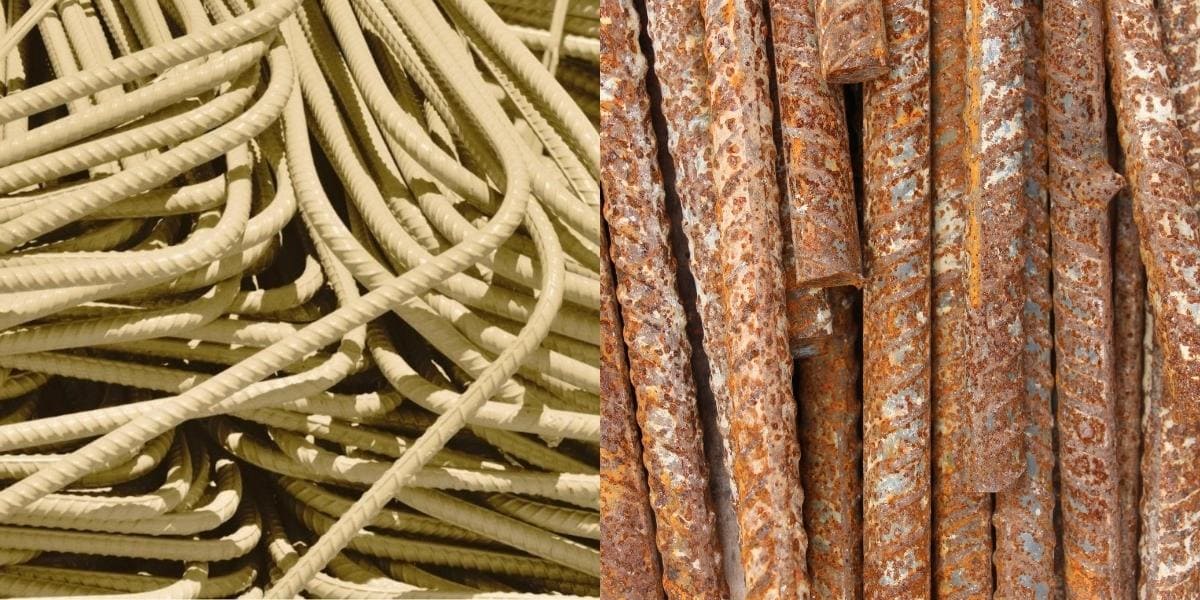
The True Cost of RCC
Reinforced Cement Concrete (RCC) remains one of the most cost-effective structural systems in construction. It’s popular because it provides both performance and price. Concrete excels at handling compressive loads, while steel reinforcement handles tensile loads, creating a reliable, economical partnership at the initial stage.
For developers and contractors, RCC’s financial efficiency makes it an incredibly useful option. But there’s a catch that often gets overlooked: the long-term durability costs built into the system itself.
How Corrosion Begins
When you embed steel in concrete, it becomes a protective cover. The cement’s alkaline environment shields the steel naturally. But here’s the thing. That protection doesn’t last forever. Moisture seeps in. Oxygen finds its way through. Chlorides and carbonation chip away at the barrier, bit by bit. Eventually, it fails. And when it does? Corrosion moves in.
Now, rusting steel doesn’t just sit there quietly. It expands. And when it expands, it creates internal pressure that cracks the concrete around it. Over time, the concrete begins to spall. Pieces break off, more steel gets exposed, and it deteriorates faster.
What begins as something you can’t even see turns into visible structural distress. Load capacity drops, and the need for repair increases. It’s a cascade effect, and once it starts, stopping it is nearly impossible.
The Hidden Financial Impact
Here’s what catches most people off guard. Corrosion rarely manifests during handover or initial occupancy years. It emerges later – cracks spreading, leakages appearing, concrete fragments falling. By that point, remediation requires structural rehabilitation, reinforcement replacement, and comprehensive maintenance interventions.
These aren’t minor touch-ups. They are costly and disruptive operations that often exceed the cost of preventive measures taken during construction. Across a building’s lifecycle, corrosion-driven repairs can significantly increase ownership and maintenance expenditures, adding substantial costs to the initial structural investment.
Why Composite Rebars Are a Better Alternative
Composite rebars, made from fiber-reinforced polymers (FRP), have become a good corrosion-resistant alternative. Unlike steel, they don’t rust or expand when exposed to moisture.
They’re not only lightweight but also durable, and are exceptionally resistant to chemical attacks and coastal exposure. Beyond competitive initial pricing, composite rebars reduce the need for long-term maintenance, extend the structural longevity of structures, and eliminate failures caused by corrosion. This transforms RCC from a system with many hidden vulnerabilities into one engineered for continuous performance and durability.