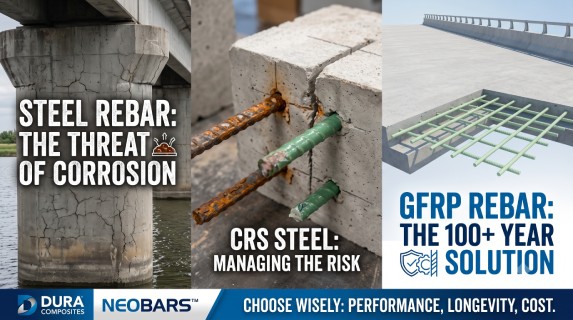
How to Compare Steel vs CRS Steel vs GFRP Rebar for Infrastructure Projects
Don’t just look at upfront costs. Compare mild steel, CRS steel, and GFRP rebar to see how choosing the right reinforcement material slashes lifecycle maintenance.

Don’t just look at upfront costs. Compare mild steel, CRS steel, and GFRP rebar to see how choosing the right reinforcement material slashes lifecycle maintenance.
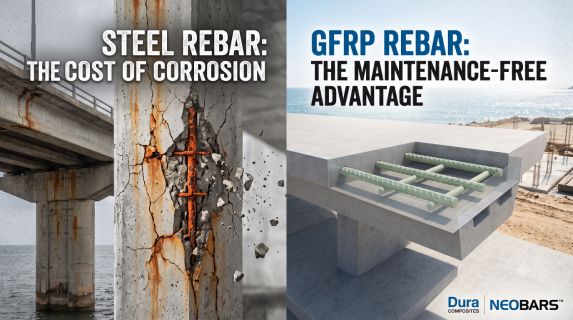
Learn how FRP rebar helps reduce maintenance costs by eliminating concrete corrosion. Know why switching from steel to FRP rebar prevents structural damage.
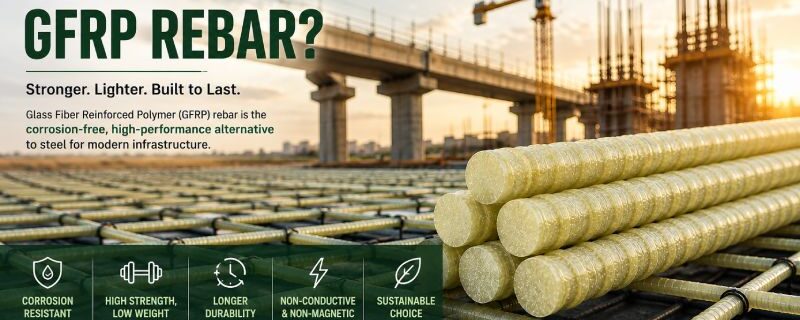
Learn what glass fiber reinforced polymer (GFRP) rebar is, its benefits, applications, and why it’s becoming a durable, corrosion-free alternative to steel.
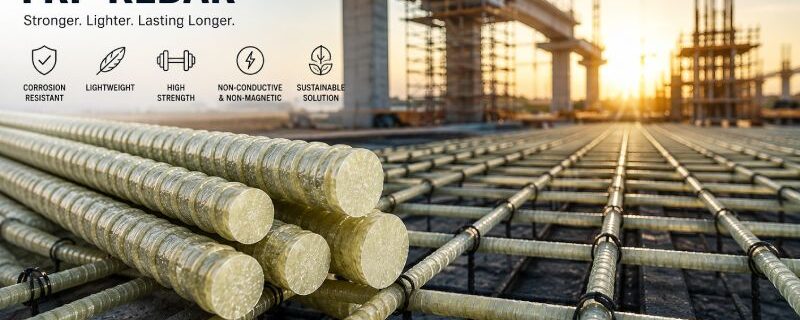
Learn what FRP (Fiber-Reinforced Polymer) rebar is, its benefits, applications, and why it’s becoming a corrosion-free alternative to steel in modern construction.
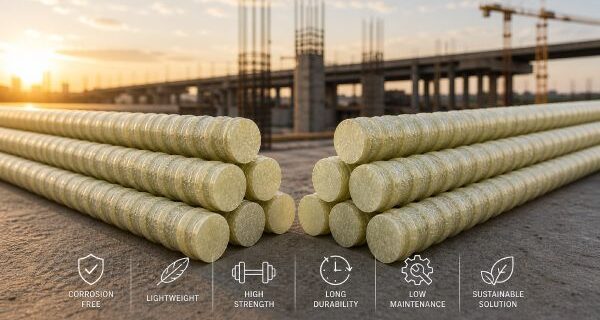
Which is better: FRP or GFRP rebar? Know the performance, cost, and application differences in this complete guide for FRP vs GFRP rebar.
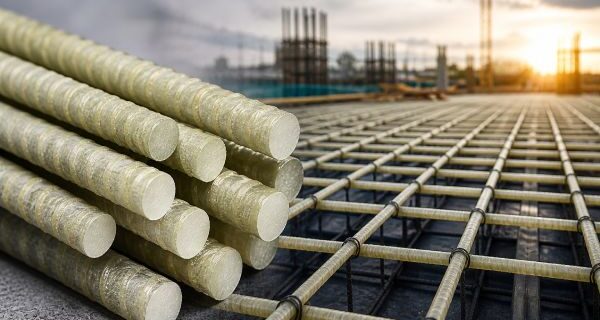
Learn the full form of GFRP rebar (Glass Fiber Reinforced Polymer), its benefits, uses, and why it’s replacing steel in modern, corrosion-resistant construction.
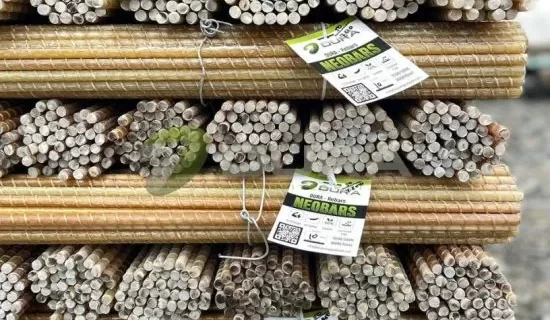
Know why choosing the right rebar is essential for wastewater infrastructure. Learn how corrosion impacts steel and how composite rebars improve durability, reduce maintenance, and extend service life.
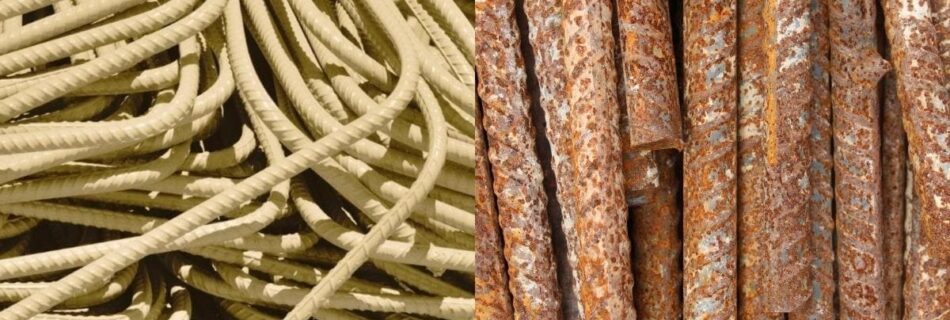
Learn how corrosion silently increases lifecycle costs in RCC structures and why choosing corrosion-resistant materials like composite rebars can improve durability and reduce long-term maintenance expenses.
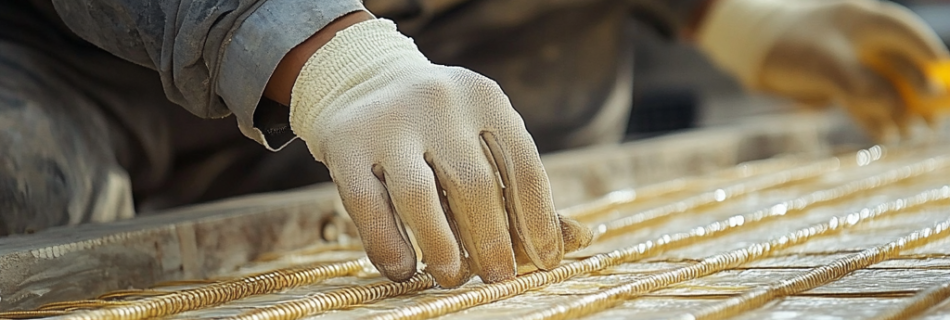
Know how composite rebars enable low-maintenance, durable infrastructure for sustainable cities by reducing corrosion, lifecycle costs, and long-term environmental impact.
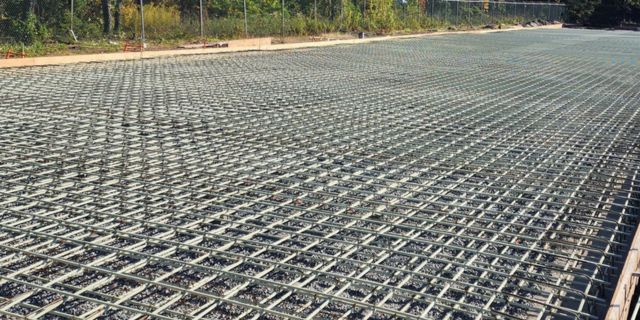
Debunk common myths about composite rebars. Explore how FRP rebars compare to steel in strength, durability, cost, and real-world performance.