
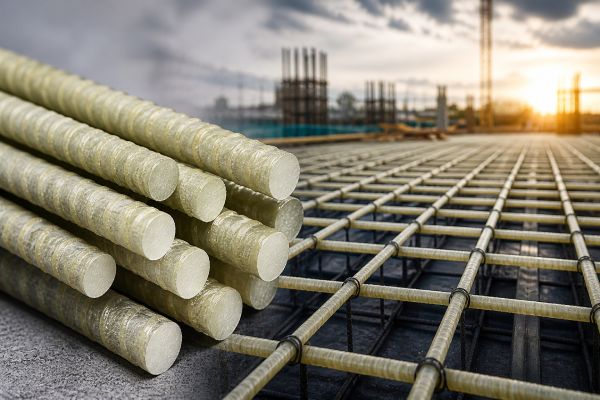
If you’ve come across the term GFRP rebar and wondered what it actually stands for, you’re not alone. It sounds technical, but the concept is surprisingly simple and incredibly important in modern construction. GFRP rebar full form is Glass Fiber Reinforced Polymer.
Let’s break GFRP rebar full form down:
- Glass Fiber: Extremely strong, thin strands of glass that provide strength
- Reinforced: These fibers are combined to enhance durability
- Polymer: A binding resin that holds everything together
Put together, GFRP rebar is a non-metallic reinforcement material used instead of traditional steel bars in concrete.
Why is GFRP Rebar Used?
For decades, steel rebar has been the standard. But it comes with one major issue: corrosion. When steel is exposed to moisture or salts:
- It rusts and expands up to 6-7 times its original size
- This causes cracks and weakens concrete structures
GFRP rebar solves this problem because it doesn’t rust at all.
What Makes GFRP Rebar Different?
1. Corrosion-Free
Because it’s non-metallic, GFRP rebar is immune to rust, making it ideal for coastal areas, bridges, and water treatment plants.
2. Strong Yet Lightweight
GFRP is up to 2x the tensile strength of steel and around 70-75% lighter. This makes it easier to transport, handle, and install, saving both time and effort.
3. Non-Conductive
Unlike steel, GFRP doesn’t conduct electricity or interfere with electromagnetic signals. This is especially useful in hospitals (MRI rooms), rail and metro infrastructure, and power plants.
4. Longer Lifespan
Structures reinforced with GFRP can last 2-3 times longer in harsh environments, reducing maintenance needs significantly.
As infrastructure demands grow, GFRP is being adopted across the world. The market is expanding at a 9-12% CAGR, driven by the need for durable and sustainable materials.
Common applications include:
- Highways and bridges
- Marine structures
- Tunnels and metros
- Industrial and urban construction
In countries like India, where climate conditions can accelerate corrosion, GFRP rebar is becoming increasingly relevant. These NeoBars represent a shift toward smarter, longer-lasting construction. It tackles one of the biggest challenges in infrastructure, which is corrosion, while offering strength, efficiency, and sustainability.