
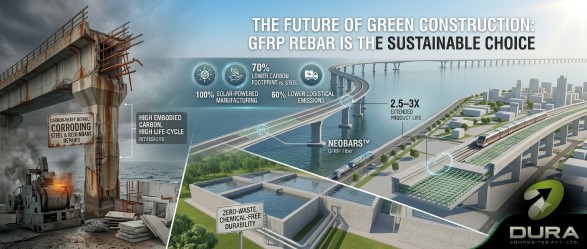
Green construction was once associated with features like solar panels, low-VOC paints, and energy-efficient HVAC systems. Today, it also considers how long a structure will last. Materials that reduce maintenance, repairs, and replacement over time play an important role in improving a project’s environmental performance. That’s one reason the GFRP rebar is gaining attention.
1. Longevity Is a Sustainability Metric
The longer a structure lasts, the more sustainable it becomes. Steel-reinforced concrete is vulnerable to corrosion, which eventually leads to cracking, spalling, and costly repairs. Every repair means more concrete, more steel, more transport, and more construction, all of which add to a project’s environmental impact. Because GFRP rebar doesn’t corrode, it helps extend the service life of reinforced concrete and reduces the need for repair over time. In fact, the product life-cycle of GFRP rebar is 2.5–3X that of steel alternatives.
2. Lighter Material, Lower Transport Footprint
GFRP rebar weighs about one-quarter as much as steel. That lower weight means more reinforcement can be transported in each load, reducing the number of deliveries, fuel consumption, and transport-related emissions. It also makes handling and installation easier, often reducing the need for heavy lifting equipment on site. For large infrastructure projects, these efficiencies can lower embodied carbon before construction is even underway. NEOBARS, for example, reduce logistical emissions by over 60%.
3. No Coatings, No Cathodic Protection, No Chemical Treatments
Corrosion-resistant steel options, including epoxy coatings, galvanising, and cathodic protection systems, all require additional materials, energy, and manufacturing processes. GFRP achieves corrosion resistance through the material itself, eliminating the need for these protective systems and simplifying the supply chain with fewer chemical inputs.
Green-certified and long-life-cycle projects are increasingly using GFRP rebar for:
- Coastal and marine structures, where resistance to corrosion helps extend service life.
- Water and wastewater infrastructure, where chemical exposure would otherwise require protective coatings.
- Bridges and transport infrastructure, where life-cycle carbon assessment is becoming a standard part of project evaluation.
- Green building projects, where the focus is on durability and long-term performance in material selection.
Sustainable construction isn’t only about reducing environmental impact during the build. It’s also about how a structure performs over the decades that follow. Reinforcement that doesn’t corrode and doesn’t require chemical protection can help reduce maintenance, repairs, and material use throughout a structure’s service life. As the industry places greater emphasis on long-term performance, GFRP rebar, such as NEOBARS(TM) by Dura Composites, is becoming an increasingly practical choice for durable, low-maintenance construction.
NEOBARS are the greenest GFRP rebars in the country, manufactured in a 100% solar-powered plant. Their carbon footprint is 70% lower than that of Steel TMT, and the product adheres strictly to green manufacturing practices under a zero-waste policy. To date, they have helped avoid over 2,900 tons of carbon by replacing steel.